Collector story
What I Learned About Collecting Pokémon Cards From Logan Paul
He paid $3.5 million for a fake case, sold a Pikachu for a record $16.49 million, then spent about $400,000 on a factory sheet of the first two Pokémon cards, just to peel them. Here is what that run taught me, and how to use it without a seven-figure budget.
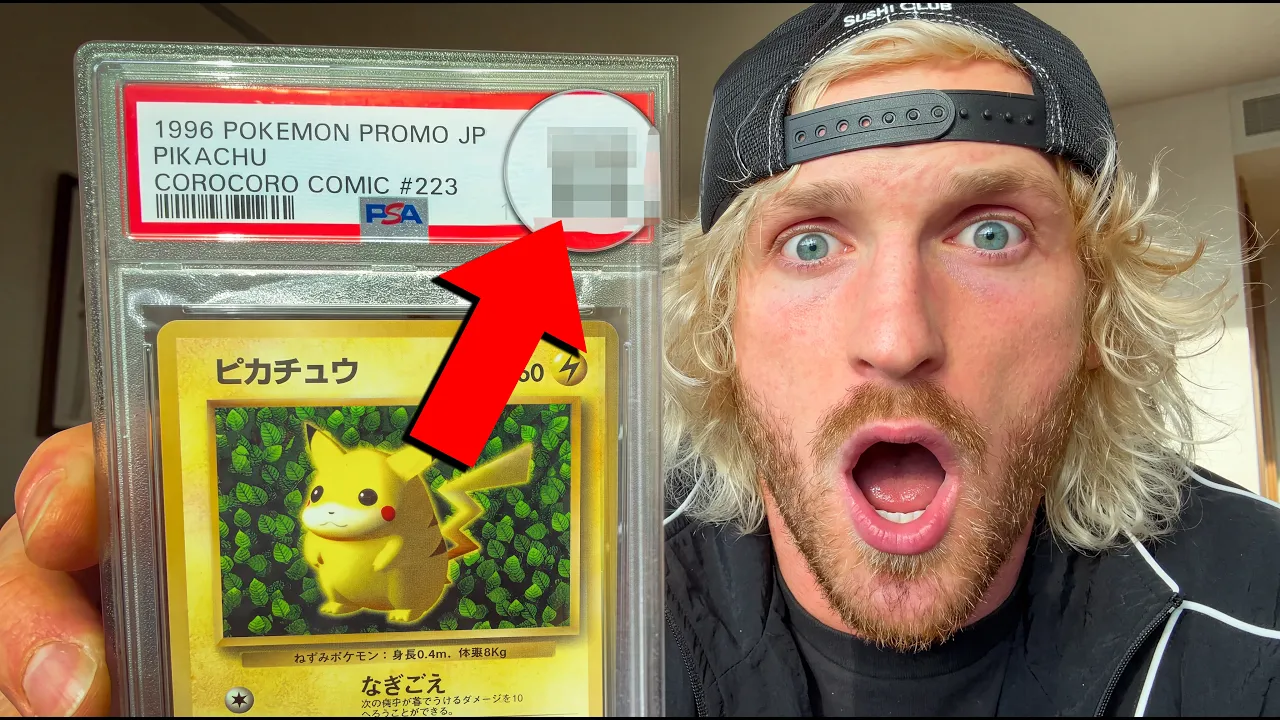
In October 1996, kids in Japan bought the November issue of CoroCoro Comic and found a thick sheet glued inside. Printed on it was one instruction: "Come on, let's peel it off!!"
Stuck to that sheet were two cards: a glossy Pikachu and a glossy Jigglypuff. They were the first Pokémon trading cards ever released. The magazine hit shelves on October 15, five days before the first Pokémon card packs reached Japanese stores.
Most kids did what the sheet said. They peeled the cards, played with them, bent them, and lost them. Thirty years later, Logan Paul paid about $400,000 for one of only a handful of known pre-production sheets, a factory copy that never went into a magazine at all. Then he cut it in half on camera and peeled it himself.
He was chasing something that does not exist: a PSA 10 of that first Pikachu. More than 1,000 copies have been graded. Not one has earned a 10.
I watched his whole Pokémon run, from the $150,000 Charizard in 2020 to this summer's CoroCoro hunt. Most of us will never spend seven figures on cardboard. But his wins and losses are the same mistakes and good calls we make at a card show, just louder. These are the lessons I took from them.
What was the first Pokémon card ever?
The first Pokémon trading cards were a Pikachu and a Jigglypuff given away in CoroCoro Comic's November 1996 issue, on sale October 15, 1996. Both are glossy, and neither has a rarity symbol. The original Pikachu is easy to spot because it credits the wrong artist: it lists Ken Sugimori, but the art is by Keiji Kinebuchi. Collectors call this art "Ivy Pikachu."
Logan Paul's Pokémon card timeline
Six years and many millions of dollars, in eight rows. Dates come from his YouTube uploads and the public records linked in the sources. Yellow squares mark the CoroCoro hunt.
Buys a PSA 10 1st Edition Base Set Charizard for $150,000. He later cracks it out of the slab and gets a BGS 10, a risk he kept off YouTube until July 2026.
Spends $2 million on Pokémon cards, then opens a $1 million sealed 1st Edition box on a livestream.
Opens a "sealed" 1st Edition Base Set case he bought for $3.5 million. The packs inside hold G.I. Joe cards.
Reveals the only PSA 10 Pikachu Illustrator, bought privately in 2021 for $5,275,000. Guinness lists it as a private-sale record. He had already worn it to his WrestleMania debut.
Sells the Illustrator through Goldin for $16,492,000, the most ever paid for any trading card at auction.
Posts his CoroCoro hunt. The title puts his spending at $2,713,096. His first peel grades PSA 5 for Pikachu and PSA 2 for Jigglypuff.
Peels a pre-production sheet that cost about $400,000 during a livestream that ran past midnight.
The grades come back: PSA 9 Pikachu, PSA 8 Jigglypuff. There is still no PSA 10 Pikachu.
Lesson 01
The story is part of the card
Logan admits he talked about CoroCoro for years with very little idea of what it was. The name is printed right on the Pikachu Illustrator. It took a call with John Nelson, Kai Cenat's manager and a deep CoroCoro collector, for him to dig in.
CoroCoro is a monthly manga magazine for kids, about as thick as a phone book. Each issue came with bonus items called furoku: posters, scratch cards, and, starting in 1996, Pokémon cards. Bulbapedia counts 36 Pokémon cards given out this way. Early Mew promos, Surfing Pikachu, and the contest that created the Pikachu Illustrator all trace back to its pages.
In 1996, distributors doubted the card game would sell. CoroCoro gave it a push. Early ads billed the first set as "102 + 2" cards: the 102-card base set plus its two magazine promos.
That history is also how you tell the real card apart. The Pikachu art was reprinted several times. The 1996 original is the one that wrongly credits Ken Sugimori as the artist. The real artist is Keiji Kinebuchi, and later printings fixed the credit.
Do this
- Before you buy a vintage promo, learn how it was given out: a magazine, an event, a mail-in, or a league.
- Check the small print. Artist credits, stamps, and finish, like glossy or matte, can separate an original from a reprint.
- Save the story with the card, in a binder note or your collection app.
Lesson 02
Condition hides in the light
Logan's first try used his best-looking complete magazine. He peeled the pair and compared the Pikachu with scans of every PSA 9 for sale. One collector on his call said it was at least a 9, and another thought it could be a 10. PSA came back with a 5 for the Pikachu and a 2 for the Jigglypuff. He joked that he was ready to quit the hobby.
He cracked both slabs and asked TAG, another grading company, for a second look. The grader held each card under a light and tilted it. That showed bends: soft dents you cannot see in a scan or a straight-on photo. TAG landed close to PSA: about a 5 for one card and a 4 or lower for the other. Thirty years inside a curved magazine leaves marks, and a small curl along the top edge is common too.
Do this
- Hold the card under one bright light and tilt it. Look across the surface, not straight down at it.
- Check centering on both sides. PSA's Gem Mint 10 standard allows about 55/45 on the front and 75/25 on the back.
- Price a raw card as a raw card. Do not count a grade you have not been given.
Our card grading guide walks through that light test step by step, and raw vs PSA values shows how to price each possible grade.
Watch the PSA 2 and PSA 5 reveal, then the bends at TAG Same video, from 25:34
Lesson 03
A sealed case is not proof
In January 2022, Logan flew to Chicago to open a sealed case of 1st Edition Base Set boxes. He had paid $3.5 million for it. Baseball Card Exchange had checked the outside: the tape, the labels, and how the cardboard had aged. The friend who sold it to him had paid $2.7 million.
When the packs came out, they felt puffy and light. They held G.I. Joe cards. On camera, the buyers said they trusted the case because it had been vetted. One person in the deal also said the man who first brought in the case had told three or four different stories about it.
An authentication checks the object, and provenance checks its story. When the story keeps changing, walk away, no matter whose sticker is on the box.
Do this
- Ask where a card or box came from and who owned it before. Write the answer down.
- Treat changing stories, rushed deals, and no-inspection terms as red flags.
- Check raw cards yourself with the steps in how to spot fake Pokémon cards.
Lesson 04
Population shows scarcity, not price
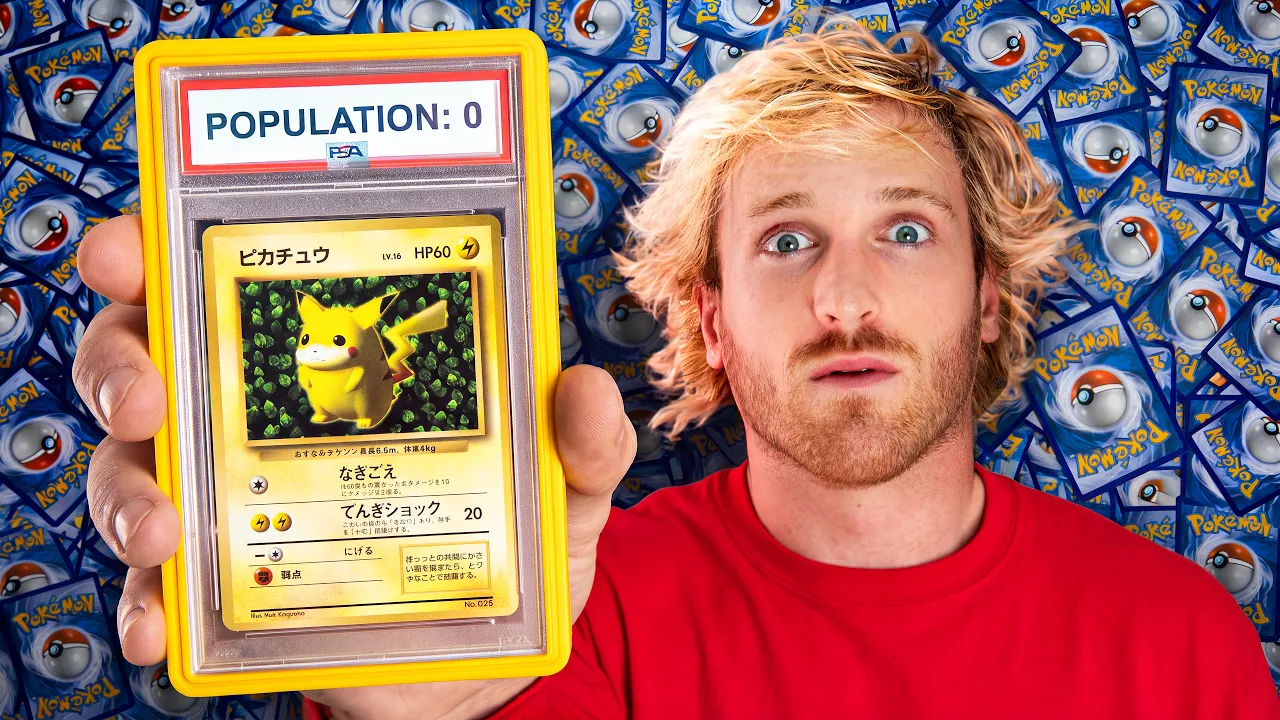
The whole CoroCoro chase rests on PSA's population report, the public count of how many copies earned each grade. For the 1996 Pikachu, it shows more than 1,000 graded and zero 10s. For the Pikachu Illustrator, only one PSA 10 is known: the card Logan sold for $16.49 million.
Scarcity at the top grade is real. But look at how Logan priced his new PSA 9. He said it is worth at least $250,000 because another owner of a PSA 9 turned down that offer. That tells you about one owner. It is not a sale.
Do this
- Look up how many copies exist at each grade before you pay a grade premium.
- Compare sold prices for the same printing at the same grade.
- Treat asking prices and turned-down offers as noise until a card actually sells.
For the full method, read how Pokémon card prices work. To see which English cards carry the highest market references today, browse the most valuable Pokémon cards.
Lesson 05
Complete beats "improved"
Before his first peel, Logan asked how much taking the cards out would cut the magazine's value. The answer from the collectors on his call was about 95%. Logan valued his best complete copy, cards still attached, at about $150,000. Once peeled, the magazine is just a magazine, and the cards have to grade high to win the money back. His 5 and 2 did not.
Sometimes the gamble pays. His cracked Charizard came back a BGS 10. But he shows you both outcomes, and you only get to see your own after it is too late to undo.
Do this
- Value the item as it is today: complete, sealed, or slabbed.
- Work out what happens if the result is one or two grades worse than you hope.
- If you cannot afford that outcome, keep it whole.
Before you open, peel, or crack anything, run the numbers with the grading decision math.
Lesson 06
Know who is telling the story
Logan's newest Pokémon videos also promote Ripit, the online pack-ripping site he invested in and helped build. In his July and August videos, a graded CoroCoro magazine was offered as a Ripit pack prize, and cards from his practice peels were listed there too. On a visit to PSA's office, he mentioned that he is an investor in Collectors, PSA's parent company.
He says all of this on camera. Still, the hype and the price talk come from someone with a stake in the hobby's excitement. Enjoy the show, then check the numbers yourself.
Do this
- Look up the exact printing before you trust a price you heard in a video.
- Use dated market references and note the source.
- Identify your own cards with the free Pokémon card scanner, then compare current prices.
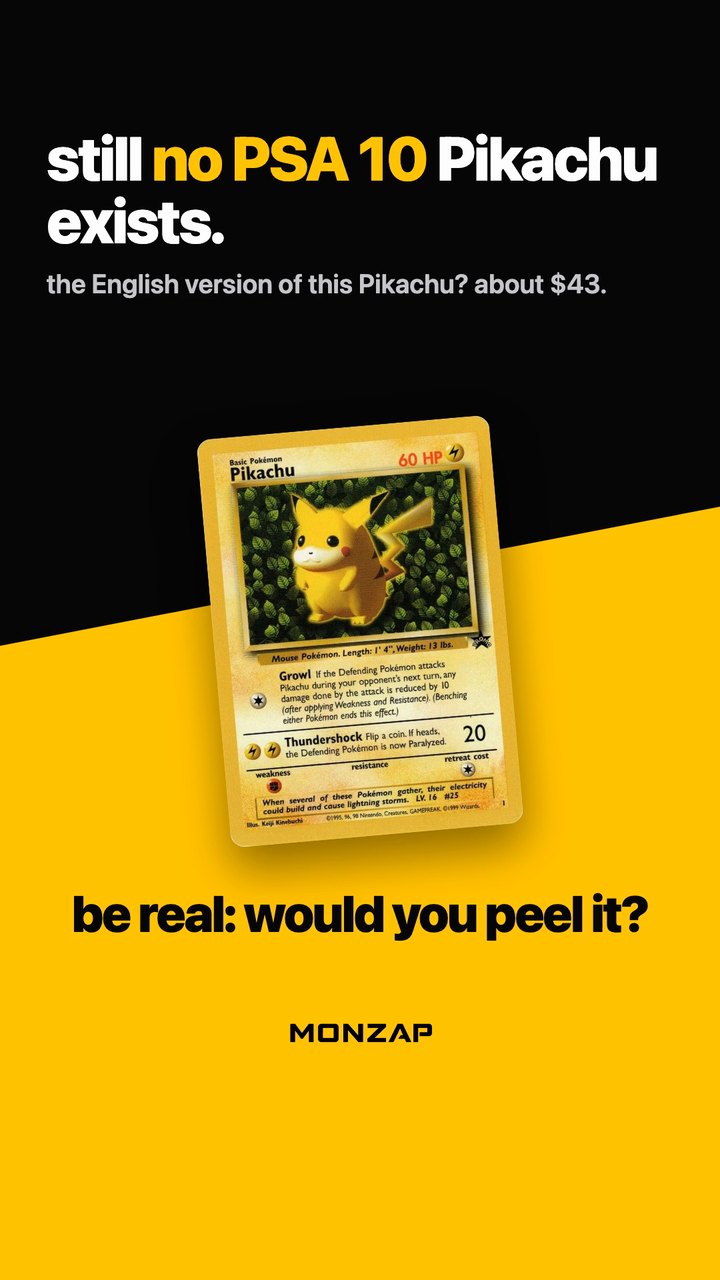
You can own the first Pokémon card for about $43
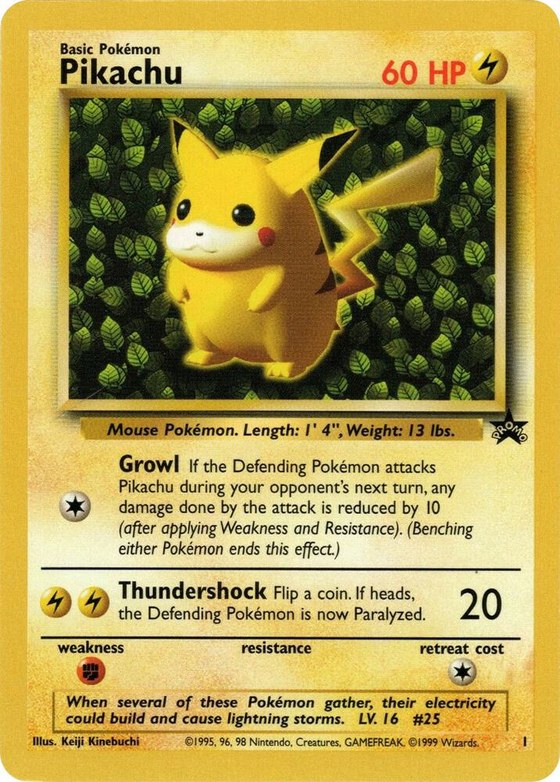
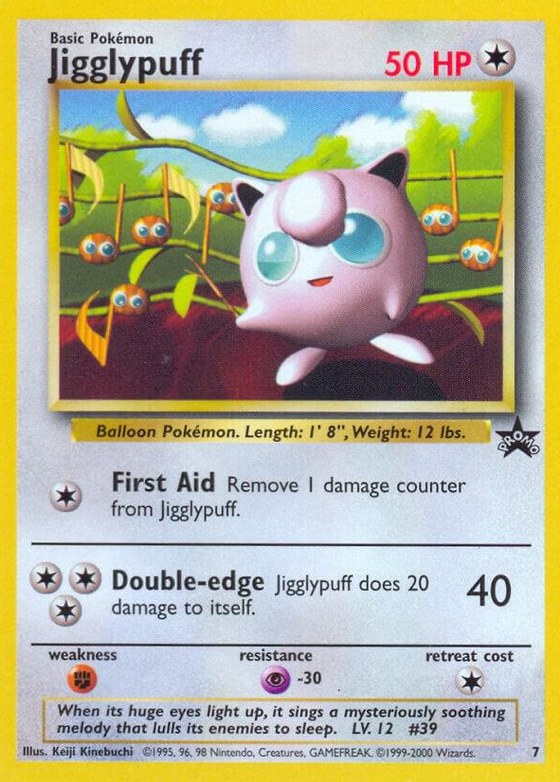
Logan chased the original 1996 Japanese print in a grade that does not exist yet. The same Pikachu art reached English players in July 1999 as Wizards Black Star Promo #1, handed out through the Pokémon League. Jigglypuff followed later that year as Promo #7, through a Pokémon: The First Movie soundtrack promotion.
- Pikachu, Promo #1
- $43.06
- Jigglypuff, Promo #7
- $38.34
TCGplayer market prices for the normal printings, checked October 9, 2026. Condition changes the price. A 1st Edition Promo #1 Pikachu from 1st Edition Jungle packs is a separate, pricier card.
Partway through the CoroCoro video, Logan called the hunt the most fulfilling collecting he had ever done. What hooked him was the history. That is the part anyone can copy: pick the story you love, learn it well, and let your binder follow.
Logan Paul and CoroCoro FAQ
What was the first Pokémon card ever released?
A Pikachu and a Jigglypuff peeled from a sheet inside the November 1996 issue of CoroCoro Comic. It went on sale in Japan on October 15, 1996, five days before the first Japanese expansion. The original Pikachu credits Ken Sugimori as illustrator by mistake; the art is by Keiji Kinebuchi.
Is there a PSA 10 CoroCoro Pikachu?
Not as of October 9, 2026. More than 1,000 copies of the 1996 CoroCoro Pikachu have been graded by PSA, and none has received a 10. Logan Paul's best attempt graded PSA 9.
What grade did Logan Paul's CoroCoro Pikachu get?
His first peel, from a complete magazine, graded PSA 5 for the Pikachu and PSA 2 for the Jigglypuff. His second, from a pre-production sheet he bought for about $400,000 and peeled during his July 30, 2026 livestream, graded PSA 9 for the Pikachu and PSA 8 for the Jigglypuff.
How much did Logan Paul sell the Pikachu Illustrator for?
$16,492,000 including the buyer's premium, through Goldin on February 16, 2026. Guinness World Records lists it as the most expensive trading card ever sold at auction. He bought the PSA 10 card privately in 2021 for $5,275,000.
Was Logan Paul's $3.5 million Pokémon box fake?
Yes. When he opened the supposedly sealed 1st Edition Base Set case in January 2022, the packs held G.I. Joe cards, even though the outside of the case had been checked by an authenticator.
Can I buy the first Pokémon card in English?
Yes. The same Pikachu art was released in English as Wizards Black Star Promo #1 in 1999, and the Jigglypuff art as Promo #7. On October 9, 2026, TCGplayer listed market prices of $43.06 and $38.34 for the normal printings. A 1st Edition version of Promo #1 from 1st Edition Jungle packs is priced separately.
Sources
- Logan Paul on YouTube: $150,000 Charizard (Oct 2020), $2,000,000 on Pokémon cards (Feb 2021), $3,500,000 fake case (Jan 2022), Pikachu Illustrator purchase (Jul 2022), Charizard crossover (Jul 2026), CoroCoro hunt (Jul 2026), live peel (Jul 2026), and grade reveal (Aug 2026).
- Bulbapedia: Pikachu (Wizards Promo 1), and the CoroCoro promos draft, for the release date, the sheet text, the illustrator error, the "102 + 2" ads, the furoku count, and the PSA grading history.
- Guinness World Records: most expensive trading card sold at auction.
- PSA grading standards and the PSA population report for 1996 Japanese promos.
- TCGplayer market prices for Pikachu (1) and Jigglypuff (7), checked October 9, 2026.
Written by Jordan Wade, creator of MonZap. MonZap is not affiliated with Logan Paul, Ripit, PSA, TAG, Goldin, or Baseball Card Exchange.