
How to tell if a Pokémon card is rare
Start at the bottom edge of the card. The rarity mark, collector number, and exact printing tell you more than the shine does. This guide shows what to check, what the symbols mean, and when a rare card is worth pricing.
English-card rarity references checked August 24, 2026.
Check the printed clues before the artwork
A full-art Charizard is easy to notice. A valuable error, promo, or older printing may not be. This order works for both.
- 1
Scan both bottom corners
Look for the collector number first. The rarity mark is usually close by, but its side can change with the card type and era.
- 2
Read the shape and color
Circle, diamond, and star cover the basic ladder. Multiple, metallic, outlined, or special marks point to named modern rarities.
- 3
Compare the collector number
If the first number is above the advertised set count, such as 202/198, the card sits beyond the base set list.
- 4
Lock the exact printing
Record the set code or symbol, card number, language, foil finish, and any edition or promo stamp. Those details decide the match.
This guide covers English-language cards. Japanese and other releases can use different rarity codes and set structures.
See eight rarity marks on real cards
Every example below comes from Pokémon TCG: Scarlet & Violet—151, so the border and layout stay consistent. Compare the full card with the magnified bottom edge.
-
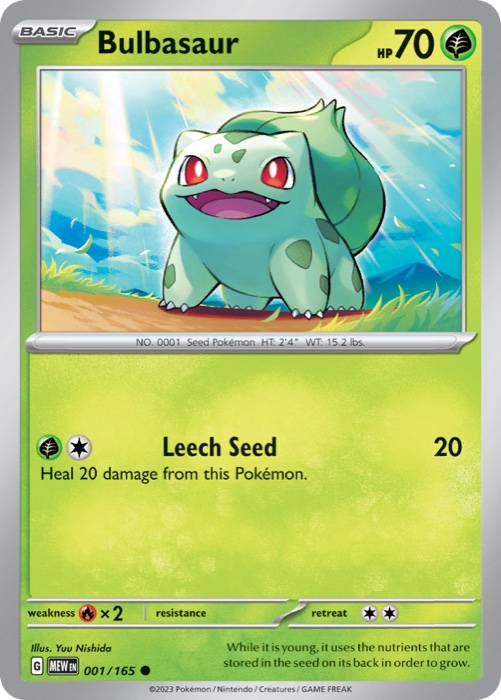 CommonBlack circleBulbasaur · 001/165
-
 UncommonBlack diamondIvysaur · 002/165
-
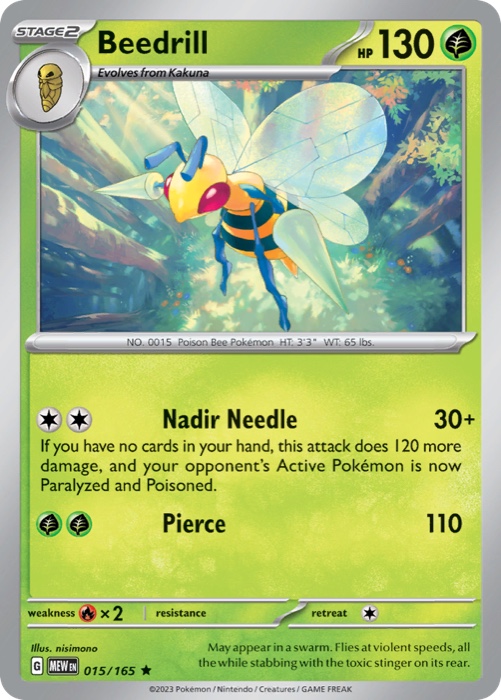 RareBlack starBeedrill · 015/165
-
 Double RareTwo black starsVenusaur ex · 003/165
-
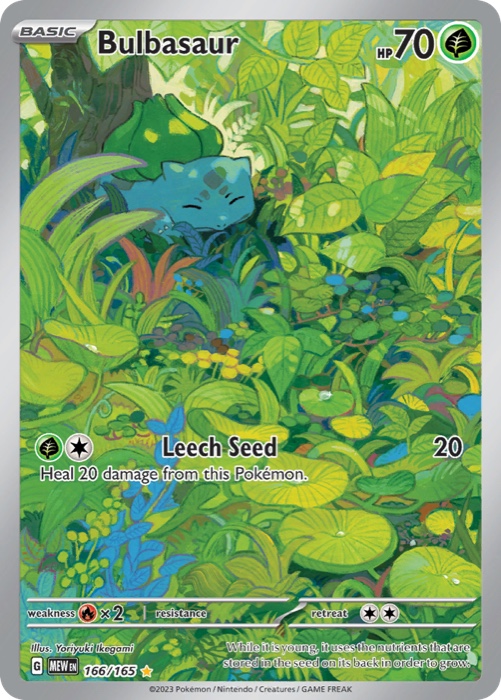 Illustration RareOne gold starBulbasaur · 166/165
-
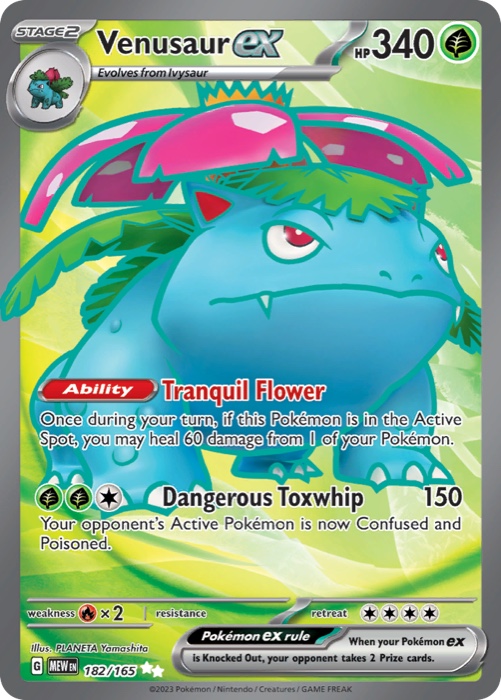 Ultra RareTwo silver starsVenusaur ex · 182/165
-
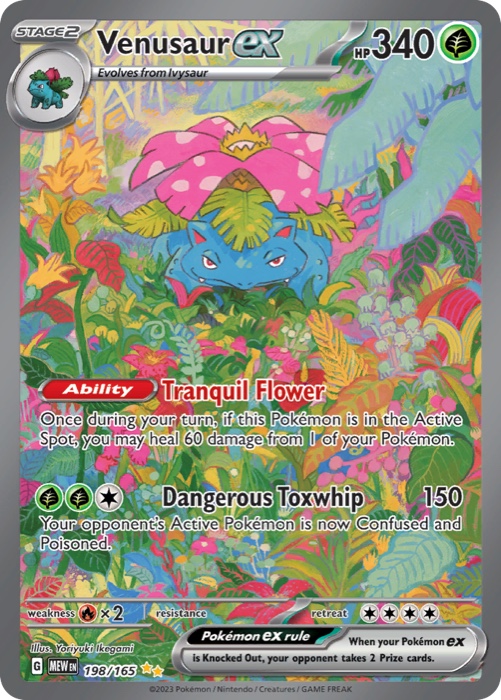 Special Illustration RareTwo gold starsVenusaur ex · 198/165
-
 Hyper RareThree gold starsMew ex · 205/165
The crop under each card shows the printed rarity mark at its real location. Use this as a symbol reference, not a price ranking. Open the complete Pokémon 151 checklist.
Use the mark, then confirm the set
From the Scarlet & Violet era onward, star count, color, outline, and special era marks identify named tiers. Not every set contains every tier, and older eras use different systems.
| Printed mark | Rarity name | What to check next |
|---|---|---|
| Two black stars | Double Rare | Confirm the exact Pokémon ex and collector number. |
| One gold star | Illustration Rare | Look for a full-card illustration and match the set list. |
| Two silver stars | Ultra Rare | Check the full-art printing rather than the lower-rarity card. |
| Two gold stars | Special Illustration Rare | Match the artwork, finish, and number; similar names can hide different printings. |
| Three gold stars | Hyper Rare (Scarlet & Violet era) | Use the set checklist to confirm an era-specific top tier. |
| Set-specific mark | Era-specific rarities | Use the official database for ACE SPEC, Shiny, Mega Hyper, Mega Attack, and other named rarities. |
The Mega Evolution series keeps parts of the modern ladder and adds its own marks. For example, Pokémon introduced Mega Attack Rare in Ascended Heroes. Read the set before you read the stars.
The collector number can expose a card beyond the base set
Collector numbers usually read card number / advertised set count. When the first number is higher, the card is outside the advertised base list and is commonly called a secret rare.
That is a strong reason to stop and identify the card. It does not mean the card is automatically the rarest or most valuable card in the set. Several named rarities can sit beyond the base count.
Learn how to read set codes and collector numbersShine, texture, and stamps are supporting clues
These details can separate two lookalike printings. They do not replace the printed rarity mark.
- Holo
- The artwork area has a foil effect. Check the printed rarity and collector number to identify the exact version.
- Reverse holo
- The foil appears outside the artwork. It can keep the same collector number and rarity as the non-foil version, so shine alone does not raise the tier.
- Full art or texture
- Edge-to-edge artwork, etched texture, and special foil can point to a higher modern rarity. The set checklist confirms which one.
- 1st Edition stamp
- This identifies an early English printing, not a modern rarity tier. Confirm the set because standard English 1st Edition printings ended long ago.
- Black Star Promo mark
- A promo mark identifies a promotional release. It is a distribution label, not proof of a high market price.
What if there is no rarity symbol?
Check both bottom corners, then find the set and collector number. Some product printings do not use a standard rarity mark. A missing circle, diamond, or star does not prove that the card is rare, fake, or worthless.
What if the shine and symbol disagree?
Trust the exact catalog match, not one clue. Reprints, promos, parallel foils, and older sets can reuse artwork while changing finish, number, or rarity.
Rare is a pull category. Value is a market outcome.
A Rare mark tells you how the card fits into its set. It does not tell you what a buyer will pay today.
- Exact printing
- Set, number, language, finish, and promo or edition marks.
- Demand
- Pokémon, artwork, playability, and collector interest.
- Condition
- Corners, edges, surface, centering, and authenticity.
- Sale evidence
- Recent completed sales for comparable copies.
Questions collectors ask first
The symbol gets you started. These answers cover the common points where a quick check goes wrong.
What symbol means a Pokémon card is rare?
On standard English Pokémon cards, a black star is the basic Rare mark. A black circle means Common, and a black diamond means Uncommon. Modern higher rarities use multiple, metallic, outlined, or era-specific marks.
Does a holo finish mean a Pokémon card is rare?
Not by itself. Holo and reverse holo describe the foil finish. The printed rarity mark still tells you the card's rarity tier, and a reverse holo can keep the same collector number and rarity as the non-foil version.
Is a secret rare Pokémon card always valuable?
No. A collector number above the advertised set count is a strong secret-card clue, but value still depends on the exact printing, demand, condition, and recent comparable sales.
What if my Pokémon card has no rarity symbol?
Check both bottom corners, then identify the set and collector number. Some product printings do not use a standard rarity mark, and promos can use a Black Star Promo mark. A missing circle, diamond, or star does not prove that a card is rare, fake, or worthless.
Rarity references
These sources support the symbols, collector-number rules, foil distinctions, and current named rarities used in this guide.
Pokémon TCG Card Database
The official searchable list of current and historical rarity names, including modern Mega-era tiers.
Open the databasePokémon: Scarlet & Violet card update
The official explanation of the silver-border redesign and the introduction of illustration rare and special illustration rare cards.
Read the announcementPokémon: Ascended Heroes preview
The official introduction to Mega attack rare cards in the English Mega Evolution series.
Read the previewTCGplayer rarity reference
Collector-number format, basic circle/diamond/star marks, promo marks, and the difference between rarity and reverse holo finish.
Read the referenceSources checked August 24, 2026. Named tiers and marks can change between sets, eras, languages, and special products, so use the exact set checklist for a final match.

Confirm the exact printing with MonZap
Scan the card to find its set, collector number, rarity, and marketplace reference. Then verify the physical finish, stamps, and condition before you buy, sell, or grade.